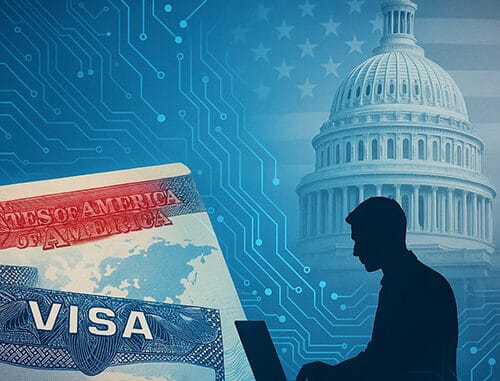
On April 22, 2026, U.S. Representative Eli Crane formally introduced a legislative draft titled the "End H-1B Visa Abuse Act of 2026." Dubbed the "most radical" proposal in history by industry insiders, it not only targets the H-1B visa but also takes direct aim at OPT, H-4, and green card application pathways. Today, we will objectively break down the core provisions of this bill, its potential impact, and how you should plan a secure "Plan B" to stay in the U.S. during this era full of variables.
Core Provisions Analysis: Exactly How Severe is the Proposal?
This proposal is not a minor tweak to existing policies; rather, it attempts a disruptive restructuring of the U.S. high-skilled foreign talent system. Its core propositions include:
- A Complete Three-Year Pause on New H-1B Visas: Proposes a complete freeze on the approval and issuance of all brand-new H-1B visas for three years following the enactment of the bill.
- Drastic Quota Cuts and Increased Salary Thresholds: After the three-year freeze ends, the annual regular H-1B quota would plummet from 65,000 to 25,000. It cancels the existing lottery system, replacing it with a top-down allocation based on salary. Even more shockingly, the bill proposes a minimum annual salary threshold of $200,000 for H-1B holders, which would directly cut off application possibilities for the vast majority of new graduates and entry-to-mid-level professionals.
- Termination of OPT and H-4 Dependent Visas: The proposal advocates for the direct cancellation of the OPT (Optional Practical Training) program for international students, meaning graduates would lose their legal buffer period for internships in the U.S. Simultaneously, it cancels the H-4 visa, closing the pathway for the family members of foreign workers to accompany them.
- Severing the Green Card Pathway and Eliminating "Dual Intent": The bill expressly prohibits H-1B holders from adjusting their status to permanent residency (Green Card) within the United States, eliminating the "dual intent" attribute that allows H-1B holders to possess immigration intent. The bill clarifies its strictly "temporary" work visa nature, requiring departure upon visa expiration, thereby completely shattering the traditional "study-work-green card" pathway.
- Coordinating with the DOL for Strict Employment Scrutiny: Employers would be required to prove they cannot find qualified U.S. workers and have not conducted layoffs. Furthermore, third-party outsourcing and part-time work would be strictly prohibited. Combined with the recently highly controversial $100,000 new application entry fee, the exclusionary trend of these policies is becoming increasingly obvious.
Attorney Insight: Panic is Unnecessary, But the Wind is Shifting
Facing such an extreme proposal, we must first calm everyone's anxieties: the proposal is still a long and highly variable legislative process away from becoming a formal law. Considering the devastating blow it would deal to the U.S. tech industry, the higher education system, and the overall economy, multiple forces—including tech giants, university coalitions, and moderate factions of both parties—will undoubtedly mount strong resistance. The probability of this proposal passing exactly as written is extremely low.
However, we cannot ignore the strong political winds this draft conveys. "Prioritizing domestic employment and drastically raising the threshold for foreign talent" has gradually become the baseline of current policies. Even if the extreme clauses are vetoed, "moderate tightening" measures—such as stricter H-1B scrutiny, raised salary standards, and tighter OPT supervision—are highly likely to be implemented in batches over the next few years. The dividend era of low-barrier entry to stay in the U.S. is indeed coming to an end.
The Way Forward: Stop Being Anxious and Activate Your Plan B
In an era of policy shifts, pinning all hopes on a single H-1B lottery or existing policy dividends is akin to building a castle on the sand. Staying in the U.S. is no longer about luck, but about long-term planning and irreplaceable core competitiveness. We strongly advise every international student and working professional in the U.S. to immediately review and activate your backup plans:
- O-1 Extraordinary Ability Visa: If you have accumulated a certain level of achievement in academia, business, or the arts (such as published articles, media coverage, industry judging, or core technical contributions), the O-1 visa requires no lottery and has no quota limits. It is our preferred pathway that has recently helped a large number of business and arts clients successfully break through.
- L-1 Intracompany Transferee Visa: Facing tightening domestic policies in the U.S., leveraging overseas routes has become an excellent strategy. Many multinational companies support transferring employees to branches in Canada, Europe, or Asia. After working there for one year, you can return to the U.S. exempt from the lottery via an L-1 visa, and even directly connect it to an EB-1C green card application.
- EB-1A Extraordinary Ability & NIW National Interest Waiver Green Cards: For top-tier talent with outstanding achievements in the sciences, arts, education, business, or athletics (EB-1A), and professionals with advanced degrees or exceptional skills (NIW), you can apply directly for a green card without employer sponsorship. Submitting an application early to lock in a Priority Date (PD) is the ultimate moat against short-term work visa fluctuations.
- Day-1 CPT & Other Legal Status Maintenance: For clients in urgent need of a status bridge, maintaining legal full-time work by pursuing a second degree (Day-1 CPT) under compliant conditions, or considering a J-1 exchange program, are effective strategies to buy time for long-term planning.
We live in a VUCA era filled with Volatility, Uncertainty, Complexity, and Ambiguity. Professional legal planning is your most solid backing to cope with the flood. No matter how policies change, the senior attorney team at LYD Law always stands on the front lines. We will customize the most secure and efficient immigration blueprint for you based on your academic background, career development, and family needs.
Do not let future policy changes disrupt your life's rhythm today. Feel free to contact LYD Law anytime for an in-depth evaluation. Let us work together to plan a career and life path where you can truly and confidently "stay"!
